


Rwanda’s Gorilla Conservation: A Success Story Facing Its Next Test
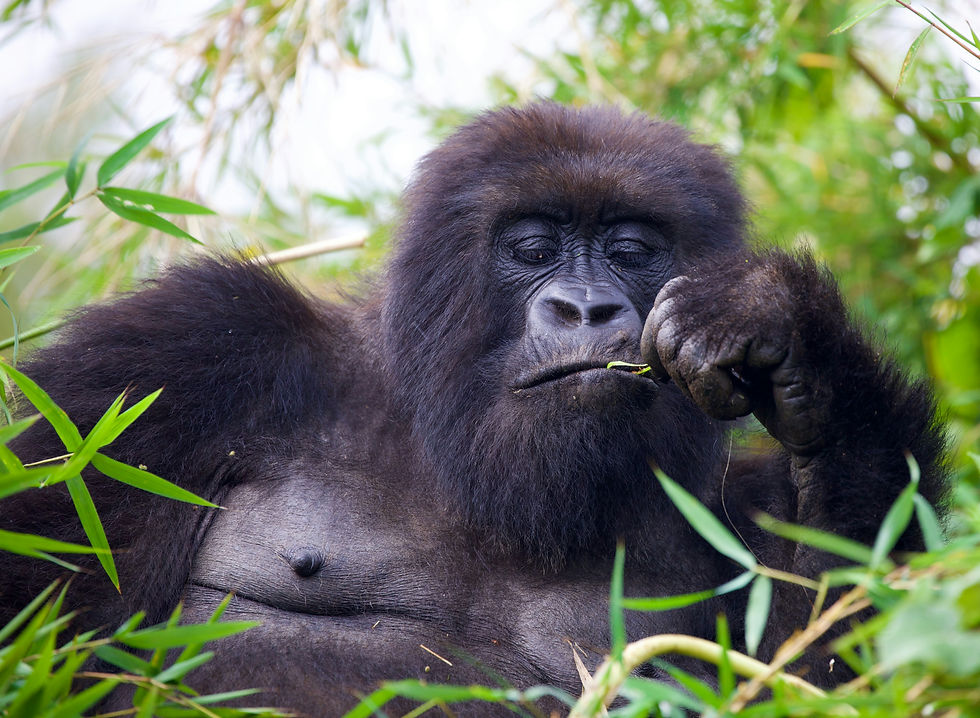
Rwanda’s mountain gorillas conservation efforts are moving from strength to strength after this
year’s prestigious gorilla naming so 22 babies named.
In the past, the mountain gorillas faced a survival crisis since were once symbols of a
conservation crisis but today, they have become symbols of what sustained protection, scientific
monitoring, community participation and carefully managed tourism can achieve.
The most important measure of that success is the gorilla population itself where today
Mountain gorillas now number roughly 1,000 animals across their range, with the population
having increased dramatically from the levels recorded several decades ago.
Rwanda's Volcanoes National Park is home to more than 600 of them, according to Rwanda's
tourism authorities with others found in both Uganda and Democratic Republic of Congo.
The annual event locally known as Kwita Izina ceremony has become one of the most visible
expressions of that progress.
Naming newborn gorillas turns conservation into something tangible with each baby
representing not only a new member of the population but also years of investment in rangers,
veterinary care, research, habitat protection and surrounding communities.
What Rwanda has got right
Rwanda has been able to turn the gorillas into economic value where the country has focused
creating a conservation model in which gorillas have economic value without being treated
simply as a tourist commodity.
Such a model in the country’s Gorilla tourism is deliberately restricted where the East African
country uses a high-value, low-volume model, limiting the number of people who can visit the
animals. Current reporting puts the number of permits at around 100 per day, with international
visitors paying $1,500 for a permit.
That expensive permit has two advantages where it generates significant conservation and
tourism revenue while also preventing the forest from being overwhelmed by visitors.
Rwanda welcomed over 1.5 million visitors during last year amounting to US$685 Million the
highest in recent years.
Rwanda Development Board (RDB) in charge of tourism says mountain-gorilla conservation
alone and associated tourism generated about US$107 million for the national coffers over a
nine-year period.
The communities living around the parks have benefited immensely where 10 percent of the
total revenues from the parks is re-invested in thse communities with thriving infrastructure
projects.
The success has created a new problem: space
Paradoxically, Rwanda's conservation success is contributing to one of its biggest challenges.
There are more gorillas, but there is not an unlimited amount of forest.
The Virunga Mountain ecosystem is surrounded by some of the most densely populated
landscapes in Africa just like Rwanda that is one of the most densely populated countries on the
continent.
So the gorilla population has kept growing in numbers as conservation efforts take root over the
years and the gorillas increasingly need additional habitat, while local communities need land
for agriculture, homes and economic activity put the two conflict hence government intervention.
This could become the defining conservation question of the next decade. Rwanda can protect
gorillas from poachers, monitor their health and generate tourism revenue but where will the
additional habitat come from if the population continues to grow?
However, Rwanda is expanding the Volcanoes National Park approximately 3,740 hectares
(about 37.4 square kilometers) to provide more habitat for its growing mountain gorilla
population.
Disease is another hidden threat
Tourists generally think about poaching when they think about gorilla conservation. But human
contact presents another serious risk.
Mountain gorillas are biologically close to humans and can be vulnerable to human respiratory
diseases. That is why visitors are subject to strict rules governing their interaction with gorillas.
For Rwanda, this creates a delicate balancing act.
Tourism is helping finance conservation, but the very presence of tourists creates potential
health risks for the animals. As interest in Rwanda's gorillas grows, maintaining strict visitor
protocols will become increasingly important.
The objective therefore shouldn't be simply to bring more visitors. It should be to ensure that
each visitor contributes more to conservation while creating as little pressure as possible on the
animals.
For travelers, Rwanda is in an interesting position.
The country has a mature gorilla tourism system, relatively controlled access and a
conservation model that makes the visitor experience part of a much larger environmental and
economic system.
But visitors need to understand that gorilla trekking is not conventional wildlife tourism.
It is physically demanding, access is restricted and encounters are tightly managed. Rwanda
currently has 12 habituated gorilla families available for tourism, according to its tourism
authority.
That limited capacity is actually part of the attraction and part of the conservation strategy.
The challenge for Rwanda will be managing the growing global desire to experience the gorillas
without allowing tourism demand to dictate conservation policy.
There is already evidence that interest is increasing. Recent reporting has pointed to rising
demand for Rwanda's gorilla experiences, with travelers booking earlier rather than Rwanda simply expanding the number of permits available.
Comments